Advertisement
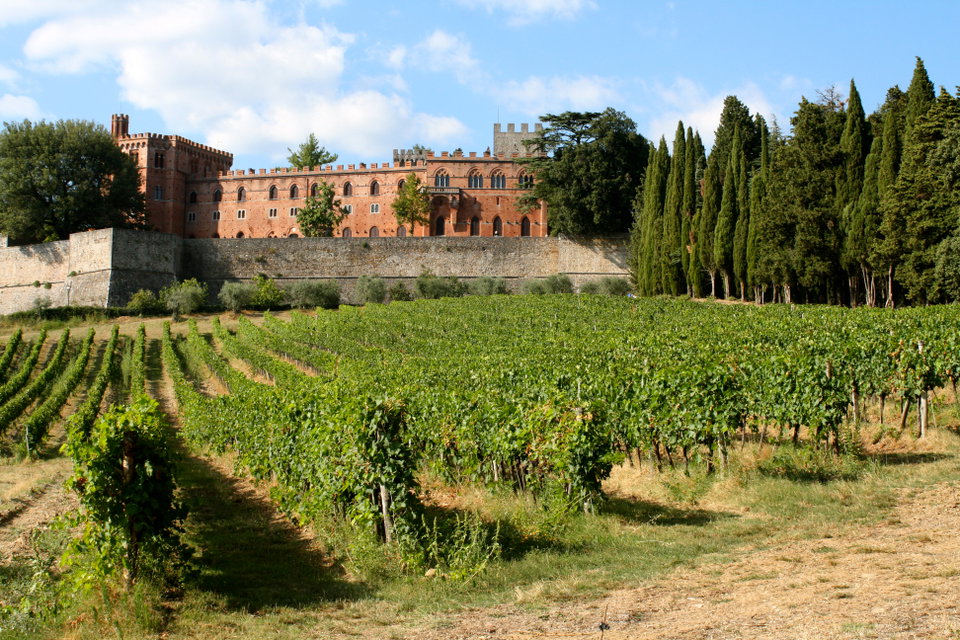
The name Chianti Classico refers to the oldest and most traditional area within the wider Chianti geographical region. Chianti is a vast area in Tuscany and is divided into 7 sub-zones as far as wine goes, each one producing its own "Chianti" wine label with a specific name, its own label and more.
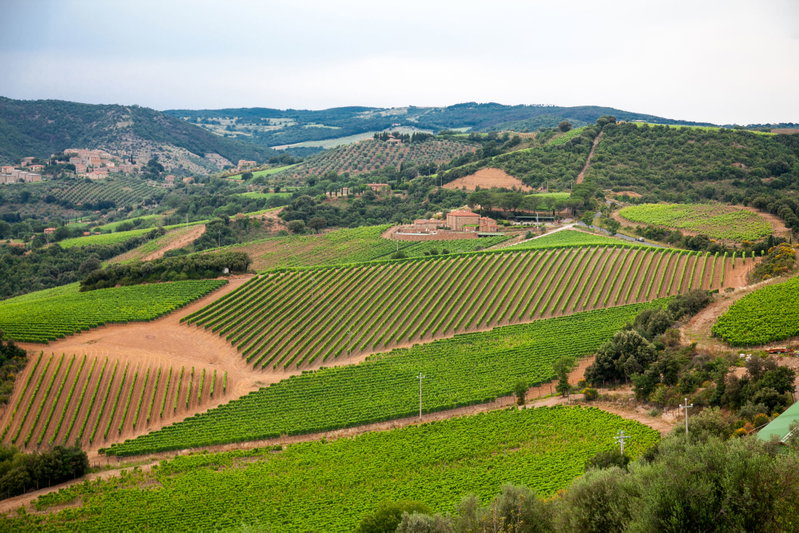
Chianti Classico itself is one of these Chianti labels and is produced in a quite specific area that stretches between Florence and Siena. It includes 14 municipalities: within the province of Florence, it includes the whole territory of Greve in Chianti, Castellina in Chianti, Gaiole in Chianti and Radda in Chianti, and part of the territory of Barberino Val d'Elsa, San Casciano in Val di Pesa and Tavarnelle Val di Pesa. It also includes part of the territory of Castelnuovo Berardenga and Poggibonsi. which fall under the Province of Siena.
Celebrated 300 years in 2016
This small wine-region produces perhaps one of the best-known wines appreciated all over the world, the Chianti Classico. Wine has been produced in this area for over 2000 years, since Etruscan times. This Tuscan region was named Chianti and recognized as a wine-region since the 13th century and its borders were defined in 1716 by an edict issued by Grand Duke Cosimo III de' Medici.
Only Chianti wines made in the Chianti Classico wine territory can carry the unmistakable pink label with the Black Rooster seal, something the other Chianti wines cannot. This particular label is the symbol of the Chianti Classico Wine Consortium, founded in 1924 to protect, promote this wine and prevent fraud.
The Black Rooster
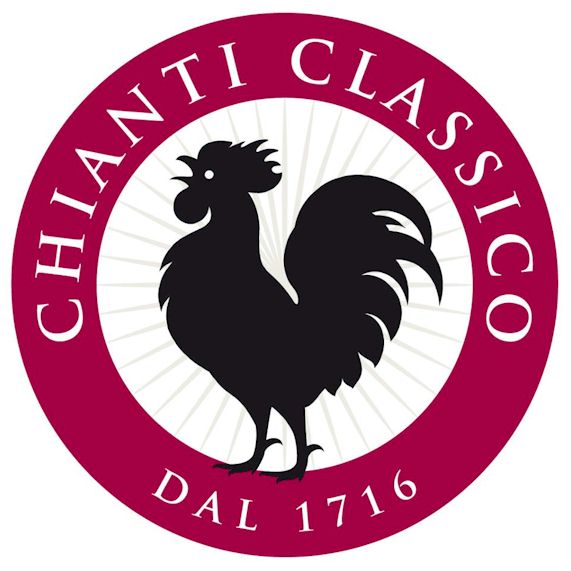
The Chianti Classico seal, updated in 2013, is a black rooster (Gallo Nero in Italian) on a white background with a bordeaux colored frame.
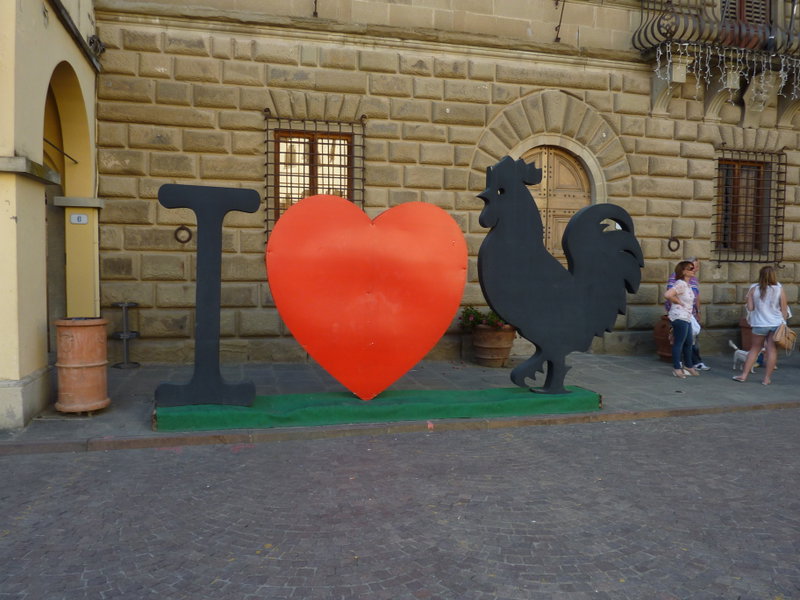
Why a black rooster? There is a legend that goes back to the 13th century, a time when Florence and Siena were fighting over land in Chianti. They decided to use a horse race to end their land dispute. One knight would leave from Florence, another from Siena when the rooster sand at dawn - and where they met up, that would be where the boundary between the two cities land would lay. The Florentines selected a black rooster for this important competition, and arguably cheated by keeping it for a few days in a box with no food. On the day of the race, they took out the rooster out of the box earlier than dawn and the rooster crowed. Thus the Florentine knight left earlier than the Sienese rider, meeting him only him only about 20 km from the walls of Siena. Don't worry, wars throughout the centuries have moved the boundary but ever since then, the black rooster has been the symbol of Chianti: first of the Chianti League in 13th century (1384) and then of the Chianti Classico Consortium since it was formed in 1924.
What Makes Chianti Classico wine special?
Chianti Classico is a DOCG wine and shows unique peculiarities and characteristics. Simply said, it is not enough to be produced within the Chianti region to be called a "Classico", those making this wine nees to respect specific production rules. Its blend has to be at least 80% of Sangiovese, the red grape natively grown in this area, and the remaining 20% can consist of other red grapes such as native varieties such as Canaiolo and Colorino, but other international varieties such as Cabernet Sauvignon and Merlot are also allowed. Already back in 1996 the central importance of Sangiovese was recognized, allowing wines made with 100% Sangiovese to also be classified as Chianti Classico, while it has only been since 2005 that only red varietals are allowed in the blend.
Its characteristics are a intense ruby red color, floral notes for its flavor notes and a harmonious, dry and rich flavor with a good level of tannins. The minimum alcohol level needs to be 12 degrees.
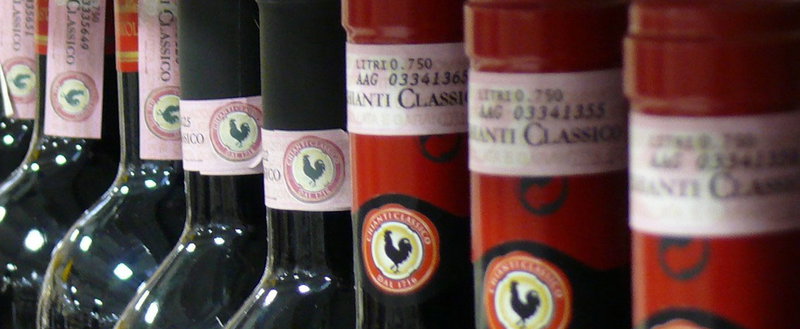
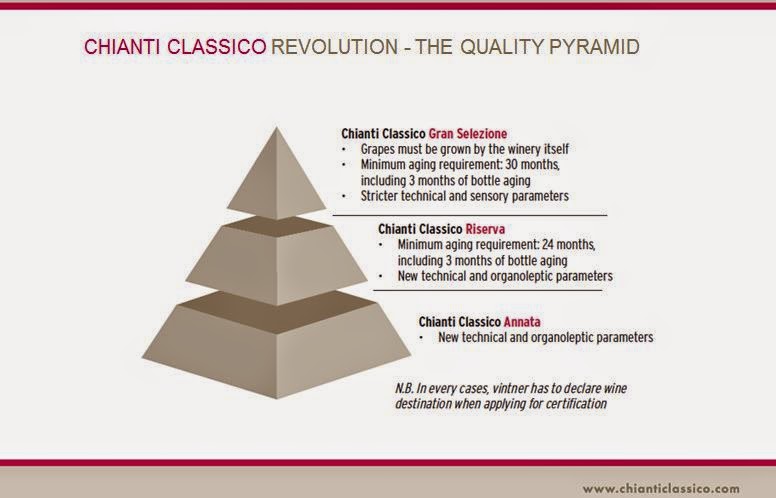
The best Sangiovese grapes are used to produce Chianti Classico Riserva, a particularly esteemed wine. Riserva wine has a deep ruby red color and requires a minimum maturation of 24 months including three months of bottle refining, as well as 12,5 degrees as minimum alcohol level.
In 2014 a new category of Chianti Classico was introduced: Chianti Classico Gran Selezione. Gran Selezione is made exclusively from a winery’s own grapes grown according to stricter regulations compared to regular Chianti Classico. Gran Selezione is granted to a Chianti Classico after it passes a suitability test conducted by authorized laboratories and after it is approved by a special tasting committee.
Someone said that when you taste Chianti Classico wine, you'll never forget it... try it, let us whether this is right!
Advertisement
Photo Gallery


Comments
Questions? Ask them on our free Forum →